http://www.dance.ohio-state.edu/5_resources/labanlab/index.html
Nothing to do with Lebanon, labia, laboratories, Los Angeles Bathyscape Association, oh no - this is a notation of movement, specifically dance movement. Came across it reading this article in core77 about incorporating movement into design - v interesting.
Thursday, March 05, 2009

Wednesday, February 25, 2009
A Tale of Two Committees: an article wot I wrote
I've been toying with the idea of applying for a course in Science Communication (a one-year MA at Imperial, since you ask), and even went to the trouble of preparing some material for my application... but in the end, I got fed up of the whole thing, and decided I wasn't that attracted to any of the career possibilities (I'm enjoying doing stuff rather than writing about it at the moment).
Nonetheless, one of the application requirements was to write an article of 400 words on a subject of my choice, either science or science policy. Why I chose the deeply dull topic I did - well, future generations will be arguing over that for centuries to come. But since it seems a shame for all that effort to go to waste, I post it here. That's what a blog is for, isn't it?
Here goes:
Nonetheless, one of the application requirements was to write an article of 400 words on a subject of my choice, either science or science policy. Why I chose the deeply dull topic I did - well, future generations will be arguing over that for centuries to come. But since it seems a shame for all that effort to go to waste, I post it here. That's what a blog is for, isn't it?
Here goes:
A Tale of Two Committees: a Brief History of Presidential Science Advice
One of the exciting things about science policy under Barack Obama is that history has stopped repeating itself. Up until now, the history of the President’s Committee of Advisors on Science and Technology (PCAST) was looking depressingly similar to its only predecessor, Eisenhower’s “President’s Science Advisory Committee” (PSAC).
Eisenhower convened PSAC in the gloomy days following the
For sixteen years PSAC had advised the President: it was to be another seventeen before it was reconvened, this time under George Bush senior. The relationship was never going to be as close as with Eisenhower, but it was still warm - Bush senior did invite the whole committee to spend a weekend with him at
Now PCAST approaches its 19th birthday. John P Holdren – a man whose CV seems tailor-made for the post – will succeed Marburger. The position’s official access to the President has been restored. And for its co-chairs, PCAST has swapped one venture capitalist for two respected scientists in Eric Lander and Harold Varmus. It only remains now to see whether this ‘dream team’ will truly have the ear of the new President.
Length: 395 wordsMonday, November 03, 2008
Logging: one for the grammarians. Or possibly grammaticians.
Logging: why the timber industry is trying to take over the internet for nefarious but as yet unclear purposes.
on/off
in/out
shake it all about, stick in some ice, hey presto, a rat's arse cocktail.
sign please
on/off
3
in/out
5
shake it all about, stick in some ice, hey presto, a rat's arse cocktail.
4
sign please
0
Question:
(I've just been simultaneously on the facebook and HSBC websites, which have different approaches to this)
Does one log on? And then subsequently log off? Or does one log in, then out? And having logged in, is it then possible to log off? Does logging on preclude logging out?
Should we all be signing in, instead?
Wednesday, October 15, 2008
Call for suggestions: what to do with plastic bottle tops
I've been collecting the tops from milk cartons at work for some time now, mainly in order to use them to mix glue in. But even after taking out a certain number for glue mixing, I've acquired a slight surplus. the question is, what do I do with 420 green plastic caps?
Some vital statistics: they are almost all green, and almost all (98.5% by my reckoning!) are the same size, which is about 40mm in diameter. That's enough, if you pack them in a straight square formation, to cover an area about 80cm x 80cm.
Two obvious ideas:
Floor mat (although an 80cm square one isn't that big really)
Lampshade
...?
Some vital statistics: they are almost all green, and almost all (98.5% by my reckoning!) are the same size, which is about 40mm in diameter. That's enough, if you pack them in a straight square formation, to cover an area about 80cm x 80cm.
Two obvious ideas:
Floor mat (although an 80cm square one isn't that big really)
Lampshade
...?
Tuesday, September 30, 2008
The Years of Rice and Salt
| Rating: | ★★★★★ |
| Category: | Books |
| Genre: | Science Fiction & Fantasy |
| Author: | Kim Stanley Robertson |
Briefly, now: this is an alternative history, based on the premise that the Black Death killed off 95% of Europe's population instead of about 30% (is that right?). In this history, Islam and China grow to fill the void, and Europe is relegated to an Islamic backwater of bickering Taifa states (love that word - don't know what it means, think it's a type of rock, but love it anyway). The backbone of the book is a group of characters who are a sort of cosmic family, a jati, who are reincarnated over and over again and always somehow find one another, without really knowing why or who they are. It's a brilliantly told fable. There are a few rare occasions where KSR gets out his broad brush and starts lecturing, but these are truly rare, and for the most part the stories are well told, the characterisation is splendid, and each episode is touching in its own way.
Highly recommended.
Concerning American politics and the current worldwide financial woes (2)
Seriously, I've never lived anywhere which HAD a Main Street! High Streets, yes, lots and lots of those. Even Inner Ting Tong. But never, ever a Main Street. So shut up about Main Street, where the heck is it anyway? I demand photographic proof it exists.
Concerning American politics and the current worldwide financial woes
If I hear the words 'Wall Street' and 'Main Street' in the same sentence one more time I shall scream.
Thursday, September 18, 2008
Hanging about at the interface - conceptships.org
It's my humble opinion that there is a strong overlap between science fiction and design - especially between sf graphical work and vehicle design. This is maybe because vehicle design is one of the most purely graphical design fields, or maybe because our vehicle purchases - especially our cars - have become so heavily loaded with meaning, or maybe because our vehicles (again, especially cars) come with that idea of 'props for living in the future' built in to them... or maybe it's simply because there's a big graphic design community and only so much inspiration going around... anyway, with all that in mind, here's a website devoted to science fiction representations of vehicles. It calls itself 'Concept Ships'.Go look at it, because someday they will be your ride. Or at least your ride will be trying to look like one of 'em.
Wednesday, September 10, 2008
Prague

View out across Charles Bridge
No doubt I will get in massive trouble with Summer Girl for including none of her favourites from the four hundred or so photos we took in the week we were in Prague, but here's a sample, more or less chosen at random.
Tuesday, September 09, 2008
Hey, what's that?
http://www.heywhatsthat.com/

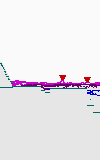
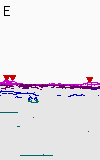
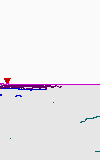

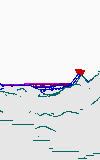
Right now this is a very flaky beta, but it's still a great application. What it does is, takes a location you specify (click on Google maps, or lat and long, or whatever) and works out what you can see from there. However, I think they've missed a serious trick here. Focus seems to be on creating a system which will calculate and display the views from mountaintops - but what this reminds me of most are the coastline sketches you find in pilot books for yachtsmen (and women, no sexism intended). These sort of sketches are really seriously useful if you're down at sea level looking out at unfamiliar coastline... sadly, though, when I tried to get the view from just off Holy Island (the Lindisfarne one), it - well, it struggled. Sea level kinda blows its little mind right now, I guess.
Right now this is a very flaky beta, but it's still a great application. What it does is, takes a location you specify (click on Google maps, or lat and long, or whatever) and works out what you can see from there. However, I think they've missed a serious trick here. Focus seems to be on creating a system which will calculate and display the views from mountaintops - but what this reminds me of most are the coastline sketches you find in pilot books for yachtsmen (and women, no sexism intended). These sort of sketches are really seriously useful if you're down at sea level looking out at unfamiliar coastline... sadly, though, when I tried to get the view from just off Holy Island (the Lindisfarne one), it - well, it struggled. Sea level kinda blows its little mind right now, I guess.
Monday, September 08, 2008
Watch Skyscrapers having a tug of war, and other shininess
Just doing a bit of housekeeping here, posting a few links I sent to myself ages ago but felt too sh1t to sit down and post (been going through a bit of a rough patch lately).
First up is a video from National Geographic, about designing small homes that feel big. Interesting. Inevitably, it's about a house in Tokyo; there are some nice ideas about out perception of space in there, though.
Next up: watch skyscrapers duke it out in a tug of war! Virtually, obviously. One of a series of really cool-looking procedural animations by the obviously nom-de-plume'd Brandom Morse.

Sunday, September 07, 2008
ABMU the next
ARGH! I just wrote a pretty epic Boring Medical Update which X has lost. Dagnammit. %$&%*$! %*$&%*^^^^^!
I seethe.
So, the short version now, as I am thoroughly pissed off. A lot has happened since October. The anal fissure that seemed to be on the mend persisted, and persisted, and persisted, until EASTER. At that time my colitis was so bad I spent the Easter weekend in bed (at my girlfriend's parents - great impression, huh). So, a change of medication was called for, and I've been on methotrexate, which makes me feel nauseous two days every week, and requires some considerable time off work for getting the necessary blood tests done (every week) and going to get The Jab. Even better, the anal fissure RETURNED after about a month. Even better than that, the skin around what the hospital staff rather charmingly persist in referring to as my 'tail end' has become very swollen and sore. Since there is no sign of an abscess or fistulae, my current theory is that this might be to do with the methotrexate, which can apparently be detected in patients' rectal mucosa (whatever the heck that is), and is also a skin irritant. So I'm thinking, either due to the fissure or my own deliberate attempts to keep my botty relaxed (trying to keep good blood circulation), there might be a small amount of discharge which is getting onto the bumskin and making it go bananas.
The main alternative theory is that it's an infection of some sort, which would suggest infliximab treatment can't start until it's fixed.
Tomorrow I go into hospital for my first infusion of Infliximab, which may or may not work, but sounds rather scary anyway. Right now, though, I feel like I've hit a bit of a low point. Frankly, the bottom soreness eclipses both the anal fissure and the colitis (which is actually Crohn's Disease, according to the latest colonoscopy). I don't know how I will manage when I go back to work on Tuesday, because I just feel so low and feeble. To top it off, I've been back from holidays for a couple of days, the weather is miserable, and half my windows are obscured by scaffolding, making the flat a very dingy and dispiriting place, especially for someone whose sore bottom really means they should just stay at home.
All in all, pretty miserable.
I seethe.
So, the short version now, as I am thoroughly pissed off. A lot has happened since October. The anal fissure that seemed to be on the mend persisted, and persisted, and persisted, until EASTER. At that time my colitis was so bad I spent the Easter weekend in bed (at my girlfriend's parents - great impression, huh). So, a change of medication was called for, and I've been on methotrexate, which makes me feel nauseous two days every week, and requires some considerable time off work for getting the necessary blood tests done (every week) and going to get The Jab. Even better, the anal fissure RETURNED after about a month. Even better than that, the skin around what the hospital staff rather charmingly persist in referring to as my 'tail end' has become very swollen and sore. Since there is no sign of an abscess or fistulae, my current theory is that this might be to do with the methotrexate, which can apparently be detected in patients' rectal mucosa (whatever the heck that is), and is also a skin irritant. So I'm thinking, either due to the fissure or my own deliberate attempts to keep my botty relaxed (trying to keep good blood circulation), there might be a small amount of discharge which is getting onto the bumskin and making it go bananas.
The main alternative theory is that it's an infection of some sort, which would suggest infliximab treatment can't start until it's fixed.
Tomorrow I go into hospital for my first infusion of Infliximab, which may or may not work, but sounds rather scary anyway. Right now, though, I feel like I've hit a bit of a low point. Frankly, the bottom soreness eclipses both the anal fissure and the colitis (which is actually Crohn's Disease, according to the latest colonoscopy). I don't know how I will manage when I go back to work on Tuesday, because I just feel so low and feeble. To top it off, I've been back from holidays for a couple of days, the weather is miserable, and half my windows are obscured by scaffolding, making the flat a very dingy and dispiriting place, especially for someone whose sore bottom really means they should just stay at home.
All in all, pretty miserable.
Saturday, August 09, 2008
Milkcrate Digest
http://milkcratedigest.com/
Isn't it a relief to know that important, dedicated people are keeping a watchful eye on those things that really matter?
I wonder where they are...
Meanwhile, here is a picture of a sofa. Or an armchair. Or maybe just a chair. Okay, it's a chair.

The brainchild of Miss Lila Jang. I think it's great. Just the thing for a small flat which needs an armchair but which would secretly like a sofa.
Isn't it a relief to know that important, dedicated people are keeping a watchful eye on those things that really matter?
I wonder where they are...
Meanwhile, here is a picture of a sofa. Or an armchair. Or maybe just a chair. Okay, it's a chair.
The brainchild of Miss Lila Jang. I think it's great. Just the thing for a small flat which needs an armchair but which would secretly like a sofa.
Wednesday, May 21, 2008
Wednesday, April 30, 2008
The Slow Movement goes, um, planetary
http://www.slowplanet.com/

It started with Slow Food; now those who would make a plea for a slower, more meditative pace of life are going global with their new beta site Slow Planet. The site has four main subdivisions, of which Slow Food is not one; instead, there is Slow Travel, Slow Sport, Slow Work, and (obviously the one I'm most interested in) Slow Design.
I understand the others - but Slow Sport? What? I don't think it really fits. Rushed travel, rushed work, rushed design - I understand why these can be argued against... but rushing around playing sport? Why not? If you prefer yoga, then by all means. But why favour one over the other?
Anyway.
This is from the core77 blog entry on the topic:
They've got some interesting things to say about design, notably a framework of six principles for slow design from their friends at the SlowLab:
1. Reveal: Slow design reveals spaces and experiences in everyday life that are often missed or forgotten, including the materials and processes that can easily be overlooked in an artifacts existence or creation.
2. Expand: Slow design considers the real and potential 'expressions' of artifacts and environments beyond their perceived functionality, physical attributes and lifespans.
3. Reflect: Slowly-designed artifacts and environments induce contemplation
and 'reflective consumption.'
4. Engage: Slow design processes are 'open source' and collaborative, relying on sharing, co-operation and transparency of information so that designs may continue to evolve into the future.
5. Participate: Slow design encourages users to become active participants in the design process, embracing ideas of conviviality and exchange to foster social accountability and enhance communities.
6. Evolve: Slow design recognizes that richer experiences can emerge from the dynamic maturation of artifacts and environments over time. Looking beyond the needs and circumstances of the present day, slow design processes and outcomes become agents of positive change.
It started with Slow Food; now those who would make a plea for a slower, more meditative pace of life are going global with their new beta site Slow Planet. The site has four main subdivisions, of which Slow Food is not one; instead, there is Slow Travel, Slow Sport, Slow Work, and (obviously the one I'm most interested in) Slow Design.
I understand the others - but Slow Sport? What? I don't think it really fits. Rushed travel, rushed work, rushed design - I understand why these can be argued against... but rushing around playing sport? Why not? If you prefer yoga, then by all means. But why favour one over the other?
Anyway.
This is from the core77 blog entry on the topic:
They've got some interesting things to say about design, notably a framework of six principles for slow design from their friends at the SlowLab:
1. Reveal: Slow design reveals spaces and experiences in everyday life that are often missed or forgotten, including the materials and processes that can easily be overlooked in an artifacts existence or creation.
2. Expand: Slow design considers the real and potential 'expressions' of artifacts and environments beyond their perceived functionality, physical attributes and lifespans.
3. Reflect: Slowly-designed artifacts and environments induce contemplation
and 'reflective consumption.'
4. Engage: Slow design processes are 'open source' and collaborative, relying on sharing, co-operation and transparency of information so that designs may continue to evolve into the future.
5. Participate: Slow design encourages users to become active participants in the design process, embracing ideas of conviviality and exchange to foster social accountability and enhance communities.
6. Evolve: Slow design recognizes that richer experiences can emerge from the dynamic maturation of artifacts and environments over time. Looking beyond the needs and circumstances of the present day, slow design processes and outcomes become agents of positive change.
Saturday, April 26, 2008
Humphrey Lyttelton dies

http://news.bbc.co.uk/1/hi/entertainment/7368356.stm
Oh so sad.
The phrase 'a national treasure' is overused, but Radio 4 is the most common accompaniment to my life and I can't think of any voice I welcomed more than his. 'I'm Sorry I Haven't a Clue' was/is quintessential Radio 4, and has been a fixture on my radio for as long as I can remember, right back to sitting listening with my family over dinner as a child. To be in the audience was one of my lifelong ambitions. As any Radio 4 aficionado will tell you, no comedy show was ever more lustily cheered, or more fondly remembered - and at the centre of it all, the unchanging institution, was Humph.
It was a long time before I discovered that Humph was more celebrated as a legendary jazz trumpeter than as a merely brilliant comedy presenter, but when I did I was blown away. What a guy.
He will be missed.
Thursday, April 24, 2008
What do you want? I don't know
Question: What do you want?
Answer: I don't know.
David Barringer muses on the essential grinding necessity of desire which underpins capitalism. It's a very interesting article in Voice, the AIGA Journal of Design. I don't agree with his last paragraph about a mature economy having transcended the need, though; after all, the Japanese economy has the worst case of novophilia of pretty much anywhere in the world, and that's what drives design there. And besides, I live on a crowded island and I'm not seeing any sign of moderation. I don't think this is geographical, or even linked to anything as concrete as material resources.
Nonetheless, I totally agree with him on one point: we don't know what we want.
Failing that, maybe we need some lessons in how to want.
Answer: I don't know.
David Barringer muses on the essential grinding necessity of desire which underpins capitalism. It's a very interesting article in Voice, the AIGA Journal of Design. I don't agree with his last paragraph about a mature economy having transcended the need, though; after all, the Japanese economy has the worst case of novophilia of pretty much anywhere in the world, and that's what drives design there. And besides, I live on a crowded island and I'm not seeing any sign of moderation. I don't think this is geographical, or even linked to anything as concrete as material resources.
Nonetheless, I totally agree with him on one point: we don't know what we want.
Failing that, maybe we need some lessons in how to want.
Thursday, March 20, 2008
garfield minus garfield
http://garfieldminusgarfield.tumblr.com/
This has been doing the rounds recently - somebody tell me if it's already been posted by someone.
"Who would have guessed that when you remove Garfield from the Garfield comic strips, the result is an even better comic about schizophrenia, bipolar disorder, and the empty desperation of modern life? Friends, meet Jon Arbuckle. Let’s laugh and learn with him on a journey deep into the tortured mind of an isolated young everyman as he fights a losing battle against loneliness in a quiet American suburb"

Genius.
This has been doing the rounds recently - somebody tell me if it's already been posted by someone.
"Who would have guessed that when you remove Garfield from the Garfield comic strips, the result is an even better comic about schizophrenia, bipolar disorder, and the empty desperation of modern life? Friends, meet Jon Arbuckle. Let’s laugh and learn with him on a journey deep into the tortured mind of an isolated young everyman as he fights a losing battle against loneliness in a quiet American suburb"
Genius.
Saturday, March 15, 2008
A rant on computers and cadence.
WhatIwantedtotalkaboutis
computers
and their
profoundlyinhumanspeedofuse-it'snotthattheygoinhumanlyfastnecessarily-weexpectourtaskstobecompletedinstantly
but
whathappenswith all the software I've
everknownisthattheimmediatetasksyou'replacingonthecomputerareonlyonepartofthedemands
placedonthemachinessystems;theantivirussystemthepowermanagementsystemandfranklygodknowswhat
all
conspire to
createtheseburstsofnearinstantperformancecoupledwithstrangelullswhichhavenorelationtowhatI
Imightbedoingorthinking...andasaresultIfeelalternatelyrushedthenfrustratedinaclassic"hurryupandwait"
situation.Thisbleedsoverintomylifegenerally,andIfindmyselffeelingtheinternalpressurewhichseemstobe
referredtoas'paceoflife'-thisinternalpressure(maybethewordI'mlookingforis'stress')spikessuddenlyassoonasacomputerisswitchedon.
(I'm just listening to this program on Radio 4, about pace of life; ironically, I'm simultaneously writing a blog entry.
It reminded me, though, to write the above, which is something I've been wanting to write about for a while now; the effect heavy computer use has on my perception of pace of life. Which, incidentally, is a very clumsy phrase for the feeling of internal pressure which I, personally, feel when I think of 'pace of life' - a perpetual driving force, an unease I feel when I'm sitting still. 'Pace of life' doesn't quite cut it, somehow; it feels a sufficiently important concept to have its own word. I bet there's a word for it in German, or French.)
Does anyone else feel this? I'd like to make a plea to OS programmers - investigate 'cadence' and please make an effort to make the actions your programs' users experience work at a more human speed. Let's face it, compared to computers we are pretty slow beings, and it seems to me that a truly elegant design would space out the things that people see with activities which the program undertakes, but the user doesn't see - and thus create a computer which works with a steady rhythm and cadence. This may just be my age talking, of course - I've notice even people only a few years younger than me seem to use their computers so much more quickly than I do. On the other hand, they do seem to miss when they try clicking icons, so maybe I just make them feel nervous. Does anyone else feel this, though? This high-stress feeling which coincides with the high-pitch, high-frequency whine of a computer fan? This lack of a human-sized cadence?
Sunday, March 02, 2008
Playstation 3 as media centre (bit long, sorry)
| Rating: | ★★★ |
| Category: | Computers & Electronics |
| Product Type: | Video Game Systems |
| Manufacturer: | Sony |

A couple of weeks ago (just before the Blu-ray/HD DVD format war was proclaimed to be over), I bought a PS3.
Actually, no, we need to go back a bit further.
Just after Christmas, I splurged on a flatscreen TV. It's not enormous, but it's sufficiently nice that suddenly it showed up all the flaws in my TV signal (of which more in some other rant), and I started to feel the need to buy a DVD player, or something - something that would do this staggeringly expensive bit of kit justice. I looked into building a Home Theater PC (HTPC) - a computer which would run as PVR, DVD player, and home media server - and would have built one, too, but for the fact that someone suggested I look at a Playstation 3 instead. And in my research, it really looked like it ticked all the boxes. The boxes look like this:
Box 1: Play DVDs.
Box 2: Play DivX and Xvid movies which I have, ahem, acquired.
Box 3: Be DLNA compliant so I could use it as a server for my Pinnacle Soundbridge, which is my only way of getting music to my 1974 Tandberg amp. (note to hi-fi buffs - it's an early transistor one, not one of the legendary valve ones)
Box 4: Act as a PVR.
Box 5: Also, it would be nice to be able to get media off it in some way so I could watch movies on my laptop in bed.
I should say at this point, for God's sake please do not tell me what I should have bought. I work in a very geeky office. I have already had that conversation about a zillion times. I have what I have, okay? Move on.
That caveat aside, a PC can obviously do all this stuff and more besides... but it's a hassle to build one, and I struggled to find a box thin enough to fit under my TV (and the ones I did seemed to have their own foibles when it came to putting stuff inside them).
So much for the shopping list - does the PS3 tick all the boxes? Well, no. It hews closely to that venerable motto of the Sony Corporation : "Great hardware, shame about the software".
First off, I did not buy the PS3 to play games on it, so right now I do not own any games. This review is not about the gaming, which I'm sure is wonderful. I bought it as a media centre, and in this respect the PS3 has a number of stupid little flaws which really hobble it. First off, and most importantly in terms of my aforementioned boxes, it is DNLA compliant - but as a client, not a server. So it won't talk to my Soundbridge. So the laptop is still doing duty as the repository of all my meedja, which was kind of what I wanted to avoid. For the same reason, the laptop cannot see whatever media is stored on the PS3's hard drive. So strike Box 5.
There's another box which we can't tick quite yet - the PS3 will Real Soon Now have an extra box which can be attached to it which will turn it into a PVR... but the PlayTV box is still slated to be released 'early 2008'.
So, in terms of network capability it has to be regarded as a bit of a flop. As far as I can tell, the logic behind this lack of functionality lies in a couple of hardware foibles which makes the PS3 unattractive to those with large home networks - in particular, the small amount of RAM in the box (256MB) means that, as a multitasking media server, streaming video to several places at once in someone's mansion somewhere, the PS3 ain't gonna cut it.
Of course, since it's just little ol' me here and I can't watch movies in bed and play games in the lounge at the same time, it'd probably be just fine, but let it pass.
Okay, so it won't serve stuff up to other machines, but it'll play everything, right? Right?
No. Nearly, oh so nearly, but... no. Again, Sony' software engineers have excelled themselves. The PS3 will play DivX stuff unless it is DivX 3.1.1... and even then it is weirdly fussy about aspect ratios. For example, I have all 6 star wars movies that appear to be encoded identically, except for their sizes. 2 out of 6 won't play. In general I estimate that around a third of my entire movie collection will need to be re-encoded.
[EDIT: Firmware 2.20, which was released this week (26/3/08) does seem to have helped, a bit - but I still have a big swathe of movies that won't play.]
Finally, there's one other area where Sony's software engineers have snatched defeat form the jaws of victory, and that is with the front-end software of the PS3, the so-called Cross Media Bar or XMB. This is very pretty, and seems sensibly laid out - but let's say, for the sake of argument, that you attach a USB hard drive to the machine. First off, unless you have all your stuff in the PS3-approved folder structure (that is to say, music in a folder called MUSIC, movies in a folder called MOVIES, and photos in a folder called something which doesn't appear to work) then the standard viewing setup won't see anything at all. What's REALLY irritating is that even if you do rearrange your media to accommodate this little foible, then the PS3 will only look in one level of subfolders. So for example, each album in my classical music collection is kept in a separate folder, and they are all kept in a 'classical' folder inside my music collection. The PS3, bless it's freakish little semiconducting heart, will look as far as 'music\classical\' and no further. So anything in a subfolder of 'classical' - which is pretty much everything - is invisible.
There is a way round this - pressing the green triangle button and selecting the 'view all' option means you can browse the entire folder structure - but really, this is very poor interface design.
Anyway, that's enough of a rant. It works great as a DVD player, though. And I kind of like it, for reasons which are not really clear to me - I mean, the interface is only moderately good, and aesthetically the external design is weirdly unresolved. So I won't be sending it back. But I'm pretty disappointed. I can only live in hope that Sony's software engineers will remedy some of these failings in future firmware updates.
There is still one radical alternative. Sony actually provide official support for those who wish to install Linux on the PS3 and use it as a computer. I could, if all else fails, install Ubuntu or Yellow Dog Linux, and use the PS3 as a media server that way... but I have one question which I have not yet found the answer to, and that is this: Linux and the PS3's native operating system need separate partitions of the internal hard drive. If I put movies etc. on one partition, can the other OS see it? If I put all my stuff on the PS3 side, will a Linux media server be able to find it? I don't know. In any case, turning to Linux to avoid fiddly little OS foibles seems like going from the frying pan into the industrial furnace.
So, I'm putting my faith in Sony's software engineers. Oh dear.
UPDATE 26/5/10: I went out and bought a network storage box int he end - rather a fancy 2-disc RAID thing. And the PS3 is linked via cable to the router. And in general, I keep my movies on the PS3... but nowadays, I never see any video lag.
However, the Playstation has developed an annoying cooling fan noise something like a very quiet hoover. It appears the cooling fan has several set operating speeds, including one which is obviously labelled 'PANIC'. And it runs in that mode most of the time, now. I've even taken the thing apart and replaced the thermal grease on the chips - something I will probably repeat when I find the time, as well as trying to ram a better heat exchanger inside somehow. It's annoying and somewhat distracting. It's quite a common problem, apparently - something below the total Yellow Light of Death failure which many PS3 owners complain of - none-fatal, but annoying.
Subscribe to:
Posts (Atom)